Most people asking how hard the crossing is are not really asking about things like distance or elevation.
What they are really asking: Can I actually do this?
Fair question.
The short answer: the Tongariro Alpine Crossing is rated as difficult. It covers 20.2 km of alpine terrain with around 800 metres of elevation gain. Most people in reasonable shape complete it in six to eight hours. It is not a technical climb, but it is a long, exposed day in an alpine environment and it demands respect.
So the Tongariro Alpine Crossing is challenging, but achievable by most people.
It takes you across exposed alpine terrain with a total elevation gain of around 800 metres.
There are steep sections, loose volcanic rock, and no shelter from wind once you are above the bush line. The weather can change quickly. You will feel it in your legs the next day.
But here’s the thing. Thousands of people who have never done anything like it complete it every summer. People in their 60s and 70s.
People who describe themselves as not really a hiker. People who trained for it, packed properly, started early, and took it at their own pace.
Whether you will find it hard depends far less on the track than it does on how well you prepare.
What Actually Makes It Hard
There are two sections that earn the Crossing its reputation.
The first is the Devil’s Staircase. This is the steep climb from Soda Springs up to South Crater, and it is the section that gets the most attention online. The name sounds worse than the reality.
It is 370 well-formed steps that zig-zag up old lava flows, gaining around 200 metres of elevation over roughly one to two kilometres. Most walkers with reasonable fitness handle it fine. The key is pacing. Short steps, steady breathing, and a few brief pauses. The reputation is bigger than the climb itself, but it does come early in the walk, so your lungs will notice it.
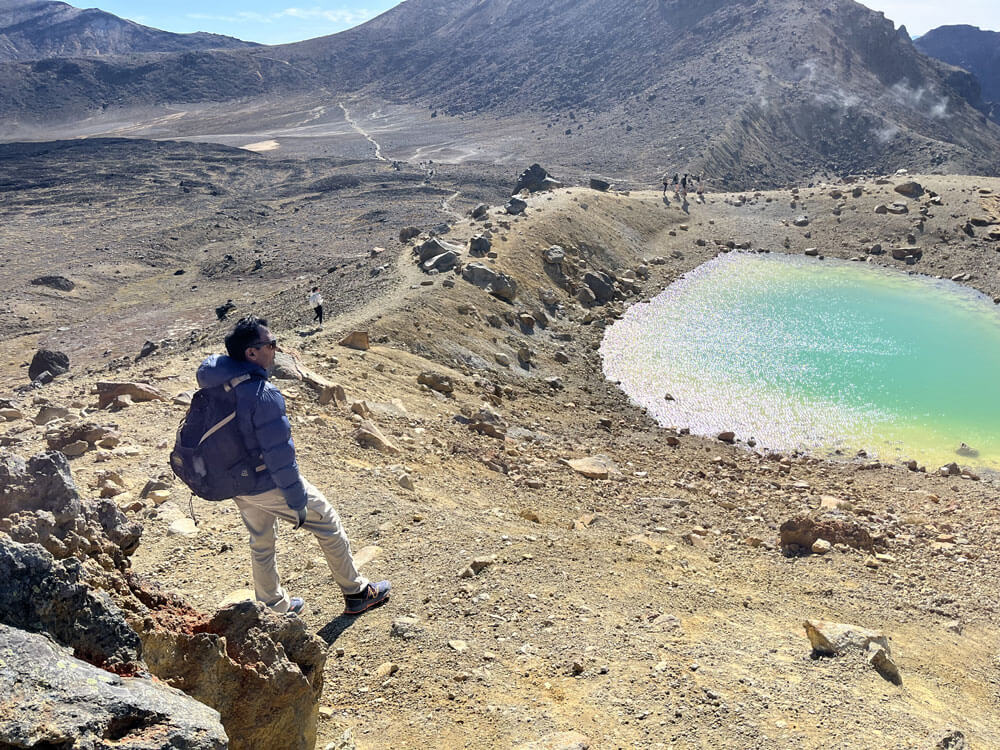
The second is the descent from Red Crater into the Emerald Lakes. This is a loose, steep scoria slope, fine volcanic gravel, that is tricky on the knees going down and has the grip of a wet jandal. It is manageable if you take it slowly. If you have existing knee problems, this section deserves serious thought. Trekking poles help for sure.
Beyond those two sections, the challenge is simply the distance and the exposure. You are walking a long way across open ground with no real opportunity to bail out once you are past South Crater.
Plan your timing wrong, get caught in bad weather, or underestimate how long it will take, and the second half of the walk becomes genuinely unpleasant.
Who Will Find It Manageable
If you can walk for six to eight hours without it being a major event, you will be fine. If your idea of a long walk is the distance from the car park to the supermarket entry, we need to have a different conversation.
That is not code for only experienced hikers. It means that if you are generally active, if you walk regularly, do not get winded on stairs, and can handle a few hours on your feet without discomfort, you have the baseline fitness this track requires.
You do not need to be a runner. You do not need to have done other alpine hikes. You need reasonable fitness, the right gear, enough water, and a willingness to go at your own pace rather than trying to keep up with anyone else.
Starting early also makes it considerably more manageable. Most people who have a rough day on the Tongariro Crossing started too late, ran out of time, or were caught in afternoon weather. An early start, on the track by 7:00am or 7:30am, gives you a buffer that removes a lot of the pressure.
Who Should Think Carefully Before Going
This is the part most websites skip, and it is worth being direct about.
If you have significant knee problems, the descent from Red Crater will be hard on you. Trekking poles help, taking it slowly helps, but there is no easy way down that slope. If your knees are already a concern, talk honestly to yourself about this before you book.
If you are not physically active and have done little walking in the months before the hike, this is not the track to get you back into it. People do get into difficulty on the Crossing, and in most cases it comes down to underestimating how far and how long it actually is.
Children under about ten or eleven typically struggle, not because of danger but because the distance and altitude push beyond what most kids that age find enjoyable. If you are bringing kids, be realistic about their specific fitness and interest level, not the average.
None of this means the Crossing is out of reach. It means it rewards honesty. Go in knowing your limits and you will have a great day. Go in pretending you have no limits and the mountain will sort that out for you.
How to Know If You Are Ready
The best self-test is simpler than people think. In the weeks before your hike, go for a walk that is at least two hours long with some hills in it. Not flat footpath walking, actual inclines. If you finish that and feel like it was manageable, you are probably ready. If you feel wrecked, you have time to build up.
The Devil’s Staircase section is what most people underestimate. Our how to prepare page covers specific steps worth reading if you want to go in confident.
What Makes It Easier Than It Sounds
A few things work in your favour.
The track is well-formed and clearly marked throughout. There is no navigation required. You are not scrambling up unmarked terrain. You are on a defined path, which means your energy goes into walking rather than route-finding.
The scenery gives you reasons to stop. Genuinely. The landscape across South Crater, the view from Red Crater, the Emerald Lakes. Most people find themselves stopping naturally and often, which breaks up the effort without you having to manufacture excuses for a rest.
And the finish is kind. The descent from the Ketetahi side will very long, but gradual. After the intensity of the alpine section, it feels manageable. You end the walk tired but not destroyed.
What to Bring That Makes a Real Difference
Two litres of water is the minimum in summer. Three is better on a hot day. There are no refill points on the track.
Trekking poles are worth more than most people give them credit for, particularly on the Red Crater descent and the Devil’s Staircase climb. If you have them, bring them. If you do not, they are worth hiring. Collapsable poles are great, as you can pack them away on the parts of the crossing where you do not need them.
Proper footwear matters more than anything else in your pack. Broken-in hiking boots with ankle support will make the entire walk feel steadier. See our full gear guide for everything else worth carrying.
Questions People Ask Regularly
Can a beginner do it?
If beginner means someone who does not hike regularly but is generally fit and active, yes. If beginner means someone who rarely walks and is not in great shape, it is more complicated. Use the self-test above.
What about older walkers?
Yes, and many do. Age matters far less than fitness and preparation. We regularly see people in their 60s and 70s finishing the Crossing comfortably. If you walk regularly and your joints are in reasonable shape, age is not the barrier.
Can I bring the kids?
For older children and teenagers who are fit and genuinely keen, yes. For younger children or kids who are not particularly active, the distance and elevation make it a long, hard day. Think carefully about whether it is actually something they want to do, not just something you want to share with them. A tired, unhappy nine-year-old on hour six of a volcanic alpine crossing is nobody’s idea of a good time. Least of all theirs.
How does it compare to other NZ walks?
It is harder than most day walks but not as demanding as any of the multi-day Great Walks. If you have done something like the Tongariro Northern Circuit or Milford Track, this will feel familiar. If your benchmark is a flat coastal walk, it will feel like a step up.
So, Can You Do It?
The Tongariro Alpine Crossing is one of the best day hikes in New Zealand. It earns that reputation. It is also hard enough that going in underprepared makes it a genuinely miserable experience for some people every year.
Go in with your eyes open about the distance, the elevation, the weather, and your own fitness. Train a little if you are not sure. Pack properly. Start early. Do not treat the time estimate as a target to beat.
Do all that and you will have an incredible day. Most people do.
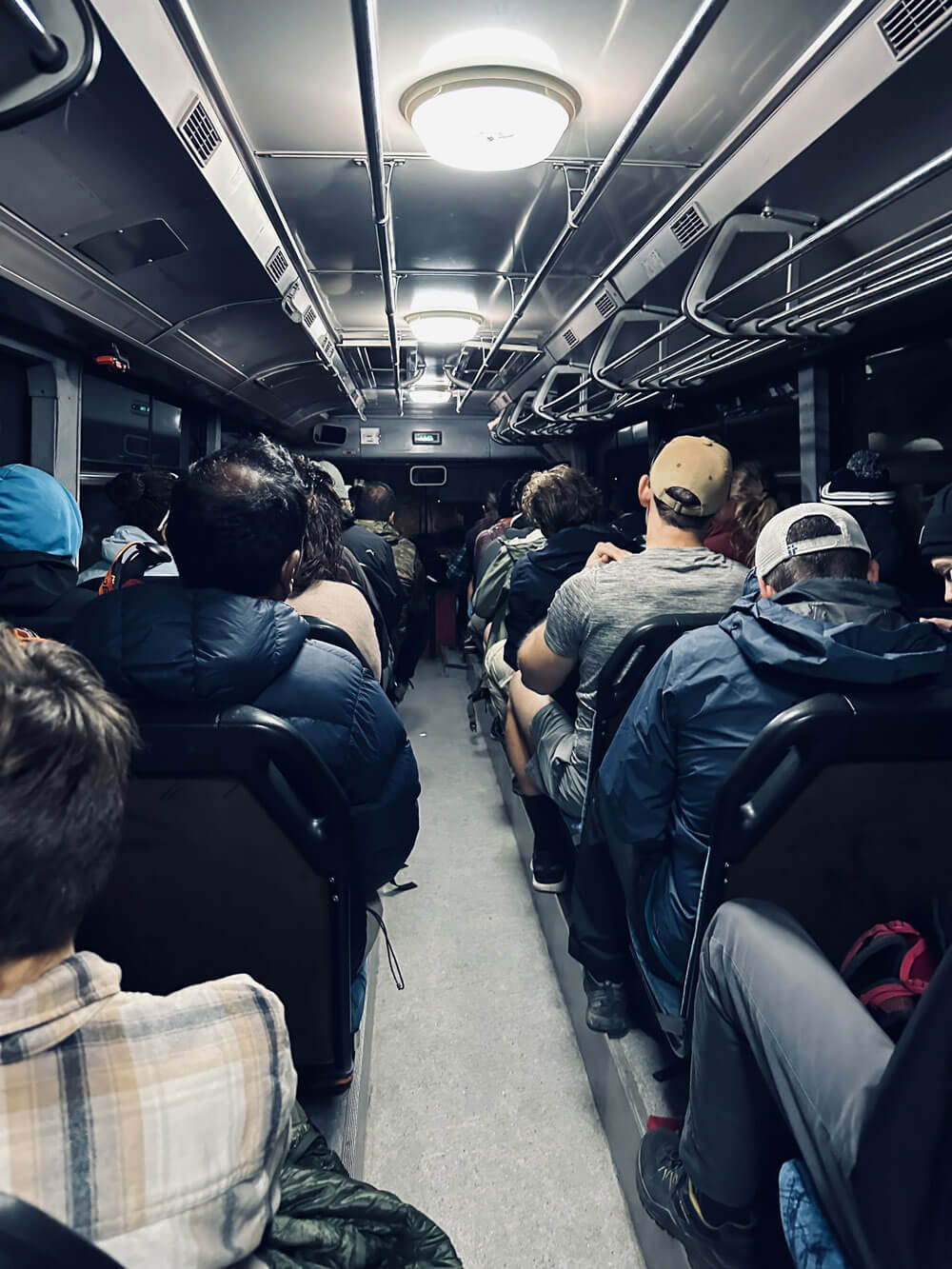
If you are ready to sort your transport, the private Ketetahi car park includes a shuttle to the Mangatepopo start so you can finish at your own pace without worrying about a return bus.