The Tongariro Alpine Crossing is one of the most spectacular day hikes in New Zealand. It is dramatic, exposed, volcanic and unforgettable.
However, it is also a protected national park and a culturally sacred landscape.
Before you head out, it is important to understand the rules and regulations that apply. These are not there to make your day harder. They exist to protect the environment, respect cultural values and keep everyone safe.
Here is everything you need to know before walking the Tongariro Alpine Crossing.
The Key Rules at a Glance
If you remember nothing else, remember this:
- Stay on the marked track
- Do not climb Mount Ngauruhoe
- No dogs
- No drones without permission
- Take all your rubbish with you
- No camping on the Crossing
- Follow parking restrictions
- Check the weather before you go
Now let’s go through what that actually means.
Stay on the Marked Track
It might be tempting to wander off for a photo or shortcut a switchback, but please do not.
The terrain up here is fragile. The volcanic soil erodes easily, and once damage is done, it takes a long time to recover. Cutting corners might save you a few seconds, but it creates long term scars on the landscape, which already suffered significant damage during the 2025 fires.
For your safety and for the park’s protection, stick to the formed path.
Please Do Not Climb Mount Ngauruhoe
You will hear people refer to this as Mount Doom from Lord of the Rings. It is dramatic and tempting.
But Mount Ngauruhoe is sacred to local iwi. It holds deep cultural and spiritual significance. While it is not physically closed, visitors are asked not to summit it out of respect.
Choosing not to climb is about honouring the place you are visiting.
Respect the Lakes and Sacred Areas
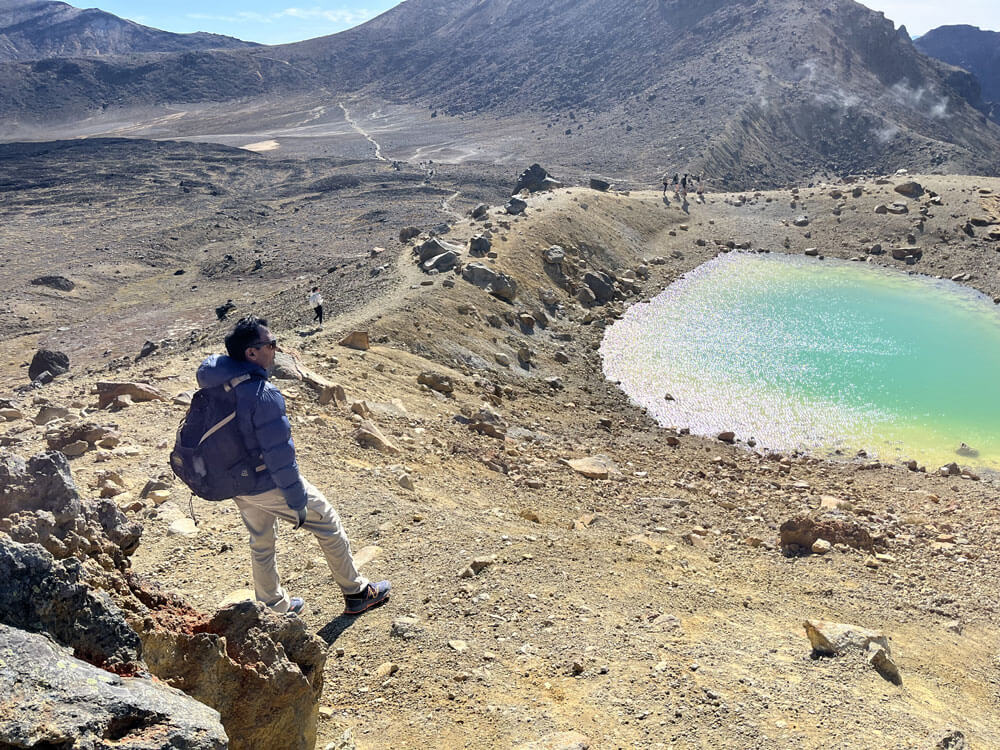
The Emerald Lakes and Blue Lake are not just scenic highlights. They are culturally significant and considered sacred.
Do not swim in them.
Do not touch the water.
Do not wash hands or feet in the lakes.
Many people enjoy lunch beside the lakes to soak up the scenery, which is absolutely fine. Just treat these areas with care and respect.
No Dogs on the Crossing
Dogs are not allowed on the Tongariro Alpine Crossing.
This is a protected national park with sensitive wildlife. Even well behaved dogs can disturb native species.
So please make alternative arrangements for Lassie for the day.
Drones Are Not Allowed Without Permission
We know the scenery is unreal.
But flying a drone here is not permitted unless you have been granted official approval from DOC. Drones disrupt wildlife, impact other walkers’ experience and can interfere with emergency operations.
While you can apply for permission, approval is rare.
It is best to leave the drone at home and enjoy the moment.
Take Everything Out With You
There are no rubbish bins on the track.
Whatever you bring in, whether it is food wrappers, fruit peels or tissues, needs to leave with you too.
Even biodegradable scraps do not belong in this alpine environment. It is simple. Leave no trace.
You might be wondering if there are toilets on the walk. Thankfully yes, there are. Read more about using toilets on the Tongariro Crossing.
No Camping on the Crossing
The Tongariro Alpine Crossing is designed as a day walk.
Camping along the route is not allowed. If you would like to stay overnight in the park, you will need to book a designated campsite or hut elsewhere in Tongariro National Park.
Parking Rules Are Strict
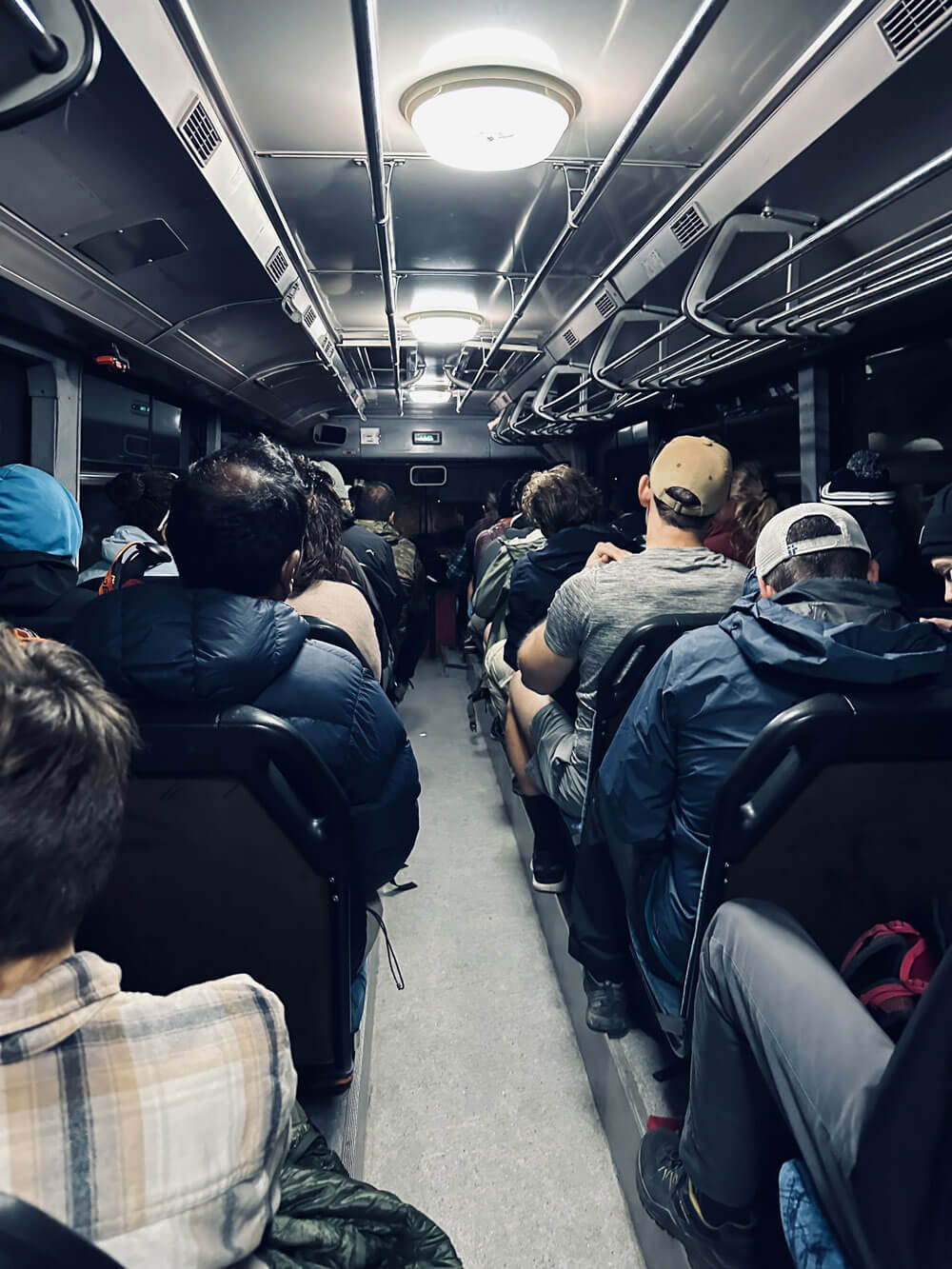
There is a strict four hour time limit at Mangatepōpō, the start of the Crossing. Since the walk takes six to eight hours and finishes at Ketetahi, parking at the trailhead is not an option for most hikers.
Vehicles that breach the rules can be fined or towed.
The simplest solution is to park at the private Ketetahi car park and use one of the included shuttle services that transport you to the starting point at Mangatepopo.
Full parking and shuttle details are available here.
Planning your transport in advance is essential, especially during summer.
You Must Have a Valid Booking
There is currently a Department of Conservation booking system in place for the Tongariro Alpine Crossing.
While there is no fee to walk the track, hikers are required to complete the online booking registration before their hike. This allows DOC to manage visitor numbers and send out important updates if conditions change.
If you are using a shuttle service, you will need to complete this registration.
Always check the official DOC Tongariro Alpine Crossing page for the latest requirements before your visit.
You Are Responsible for Your Own Safety
There is no permit desk checking your gear, but that does not mean preparation is optional.
Conditions change quickly up here. The wind can be strong. Weather can roll in fast.
Before you go, make sure you:
- Check the mountain forecast
- Bring enough water, at least two litres in summer
- Carry warm and waterproof layers
- Wear proper footwear
- Turn back if conditions feel unsafe
The car park might be calm. Red Crater might not be.
Read our full guide to staying safe on the Tongariro Alpine Crossing.
Check Volcanic and Track Alerts
This is an active volcanic area.
Occasionally sections close or alert levels change. Always check the latest weather and track updates before heading out.
If the track is closed or warnings are in place, take them seriously.
Why These Rules Matter
The Tongariro Alpine Crossing sees a huge number of visitors every year.
Without care, the fragile alpine environment would quickly suffer damage. These rules exist to protect this place so that people can continue to experience it for generations to come.
They are not there to restrict you. They are there to protect something special.
Final Thought
The Tongariro Alpine Crossing is unforgettable.
Treat it with respect.
Prepare properly.
Follow the rules.
And you will have an incredible day out in one of New Zealand’s most remarkable landscapes.