- Blog
Why the Tongariro Alpine Crossing Closes in Bad Weather (and What to Do If It Does)
Every year, thousands of people walk the Tongariro Alpine Crossing, but it’s not uncommon for the trail to be described as “closed” in poor weather, sometimes with little warning.
The most frequent reason isn’t fire or maintenance. It’s weather.
High winds, snow, rain, and freezing temperatures in the alpine environment can make the Crossing dangerous, even life-threatening.
This article explains why bad weather stops the Crossing, who makes the call, how DOC communicates it, what happens to shuttles and bookings, and what to do if conditions change while you’re out there.
Quick answer: The Tongariro Alpine Crossing is often described as “closed” in bad weather because DOC issues a strong safety recommendation not to hike, and approved shuttle operators must stop operating under their DOC concession. Hikers are not legally prevented from walking, but most people cannot access the start without a shuttle.
Contents
- Why the Crossing Closes in Bad Weather
- Who Decides if the Tongariro Crossing Is “Closed”?
- NIWA Forecast Thresholds DOC Uses (Red Crater)
- DOC Decision and Communication Timeline (4pm and 5am to 6am)
- How to Check if the Tongariro Crossing Is Open
- Why Ground-Level Weather Can Be Misleading
- What Shuttle Operators Do When DOC Advises Against the Crossing
- What Happens If You Have a Shuttle or Car Park Booking
- Why Is My Shuttle Not Running Even When DOC Says the Crossing Is Open?
- Can You Walk Anyway?
- What If the Crossing Is Open but the Weather Turns Bad?
- Final Thoughts
Why the Crossing Closes in Bad Weather
In short, it’s for safety.
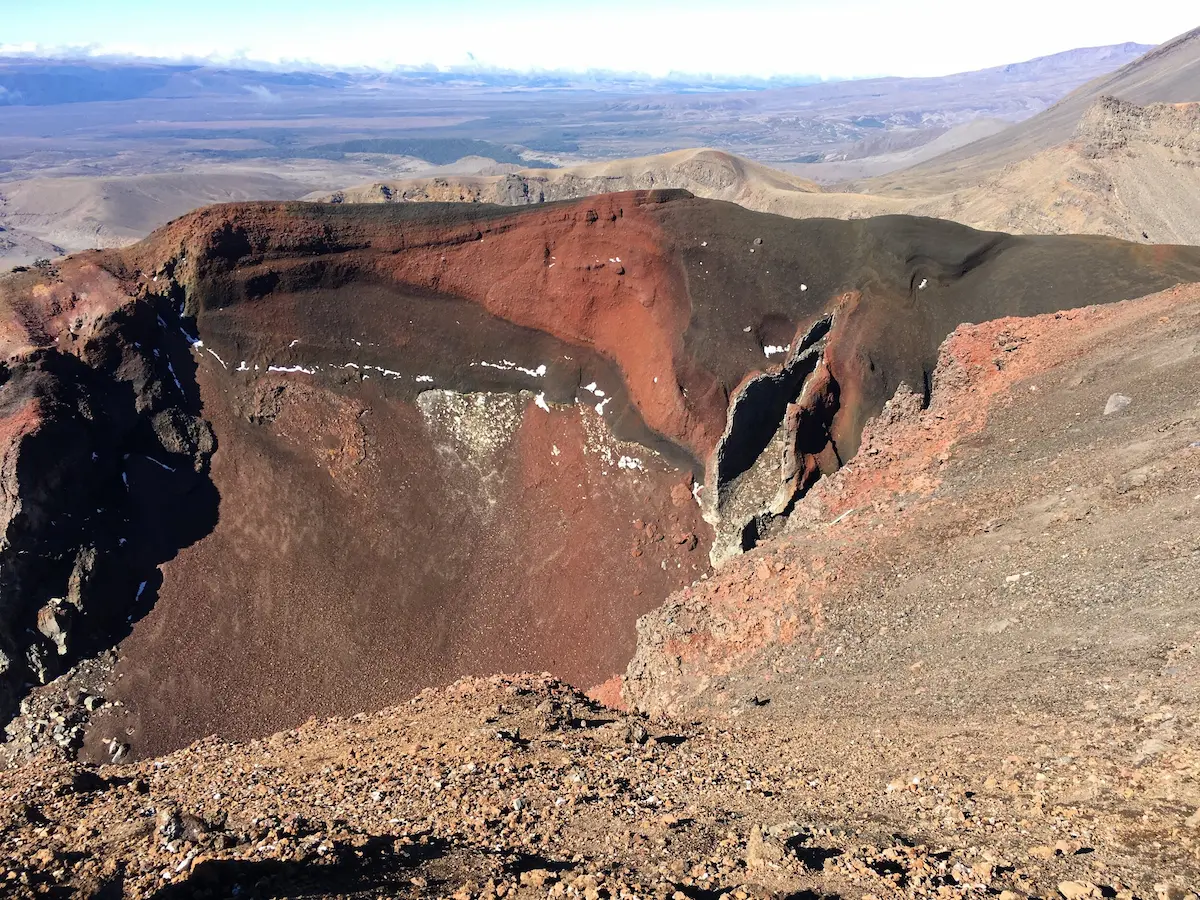
The Tongariro Alpine Crossing is an alpine hike that climbs over 1,800 metres at its highest point (Red Crater). This means it’s exposed to alpine weather systems, including wind gusts over 100 kph, heavy rain, snow, and temperatures well below freezing, even in summer.
Conditions can change suddenly and dramatically. If you’re caught in bad weather on the tops, there may be no shelter, low visibility, freezing wind chill, and slippery terrain.
DOC and shuttle operators aim to reduce risk and prevent rescue callouts by discouraging travel when conditions cross safety thresholds.
Who Decides if the Tongariro Crossing Is “Closed”?
The Department of Conservation (DOC) assesses alpine conditions and issues official safety advice for the Tongariro Alpine Crossing.
DOC does not legally “close” the track to hikers due to weather. Instead, DOC issues a formal safety recommendation advising people not to attempt the crossing when conditions are unsafe.
For approved shuttle operators, the situation is different. Under their operating agreement (concession) with DOC, shuttle providers are forbidden to transport hikers to the track once DOC has advised against attempting the crossing.
So while a hiker can technically choose to attempt the track, in practice most people cannot access the start because the shuttle services stop operating.
NIWA Forecast Thresholds DOC Uses (Red Crater)
In peak season (1 November to 30 April), DOC uses a specialised NIWA forecast for the Red Crater summit.
DOC uses these NIWA Red Crater thresholds to assess risk:
DOC may advise against attempting the Crossing when any of the following weather parameters are forecast to exceed safety thresholds for two or more hours between 9:00am and 5:00pm:
- Average wind speed of 55 kph or greater
- Wind gusts of 70 kph or greater
- Wind chill of -10°C or colder
- Wind chill of 0°C or colder with 1 mm or more of precipitation
- Rainfall rate of 2.5 mm/hr or more
- Snowfall rate of 0.1 cm/hr or more
- Total of 10 mm or more of precipitation across six hours (9:00am to 5:00pm)
DOC Decision and Communication Timeline (4pm and 5am to 6am)
DOC checks the NIWA forecast and communicates decisions in a simple two-step process.
- Around 4:00pm (the day before): DOC sends a private advisory to approved shuttle operators indicating whether the Crossing is likely to be unsafe the next day. This advisory is not public.
- Around 5:00am to 6:00am (the day of): DOC reconfirms conditions and makes the final decision for the day. This is when official notices are published and shuttle operators must follow DOC’s advice.
How to Check if the Tongariro Crossing Is Open
By far the easiest way is to check your email.
If you’ve booked the private Ketetahi car park and shuttle, the team will email you the night before your crossing to confirm whether the track is open or whether DOC has advised against attempting it.
This is often more reliable than comparing multiple websites, which can sometimes show conflicting or outdated information.
Why Ground-Level Weather Can Be Misleading
Many visitors arrive at the base and see calm, sunny conditions, then feel confused when they are told the Crossing is not recommended.
The key point is that the decision is based on conditions at Red Crater, not the Mangatepopo car park. At over 1,800 metres, weather can be dramatically different from what you see below.
New Zealand is narrow and exposed to fast-moving weather systems. A blue-sky morning can shift quickly when cold fronts move in from the west or south.
What Shuttle Operators Do When DOC Advises Against the Crossing
When DOC issues a formal safety recommendation not to attempt the Tongariro Alpine Crossing, approved shuttle operators are not permitted to run services to or from the track.
This requirement is part of their operating agreement with DOC and is strictly enforced.
Even if a customer is willing to go, approved shuttle operators must decline transport on those days. Operators who breach this risk losing their permission to operate.
What Happens If You Have a Shuttle or Car Park Booking
If you’ve pre-booked a car park and shuttle and the Crossing is not recommended due to weather, most operators will:
- Offer a full or partial refund
- Allow you to reschedule to another available day
Each operator has its own policy, so check with them directly. If you booked through a third party like a tour company or accommodation provider, contact them for options.
Why Is My Shuttle Not Running Even When DOC Says the Crossing Is Open?
Occasionally, DOC may advise that the Tongariro Alpine Crossing is open, but your shuttle provider may still decide not to operate.
This happens because shuttle operators are responsible for the safety of their passengers and staff and may take a more conservative approach based on real-time conditions.
Reasons a shuttle operator may choose not to run include:
- Stronger-than-forecast winds already being observed on the mountain
- Rapidly deteriorating weather earlier than expected
- Icy or hazardous road conditions on access routes
- Concerns about the ability to safely transport or retrieve hikers later in the day
In other words, DOC’s advice is the minimum safety threshold. Some operators may decide that conditions, while technically within forecast limits, still pose unacceptable risk.
If this happens, reputable shuttle providers will usually offer options such as rescheduling or refunds, depending on their booking policy.
While it can be disappointing, this additional layer of caution exists to protect hikers and reduce the risk of people being caught out by fast-changing alpine conditions.
Can You Walk Anyway?
If DOC has advised against attempting the Crossing and you still choose to go:
- Approved shuttles will not operate, so you may not be able to access the start
- There is no guarantee of support or rescue
- Your travel insurance may be invalidated
More importantly, DOC issues this advice for a reason. Even experienced hikers can be overwhelmed by exposure, wind, cold, ice, and poor visibility.
What If the Crossing Is Open but the Weather Turns Bad?
On rare occasions, the Tongariro Alpine Crossing may start the day open, but the weather can deteriorate unexpectedly while you are on the track.
If this happens, the safest option may be to turn back and return to Mangatepopo rather than continue across the mountain.
What to do:
- Call the Ketetahi Car Park team as soon as possible
- They can arrange transport back to your vehicle if needed
- There may be a charge, as drivers and vehicles often need to be organised at short notice
This process is designed to help hikers get back safely and reduce stress if conditions change.
Final Thoughts
If the Tongariro Crossing is not recommended due to weather, it’s for your safety, not to ruin your plans.
Conditions at Red Crater can be dangerous even when it looks calm at ground level. If you can, allow a spare day so you have flexibility to choose a safer weather window.